

What is the tolerance of a round spring steel collet?
As a supplier of Round Spring Steel Collets, I've had numerous inquiries about the tolerance of these essential components. Tolerance, in the context of manufacturing and engineering, refers to the acceptable range of variation in a dimension or a set of characteristics of a part. In the case of round spring steel collets, understanding tolerance is crucial for ensuring proper functionality, precision, and compatibility in various applications.
Understanding Tolerance in Round Spring Steel Collets
Round spring steel collets are designed to hold workpieces securely in machining operations, such as turning, milling, and grinding. The tolerance of a round spring steel collet can be divided into several key aspects:
Diameter Tolerance
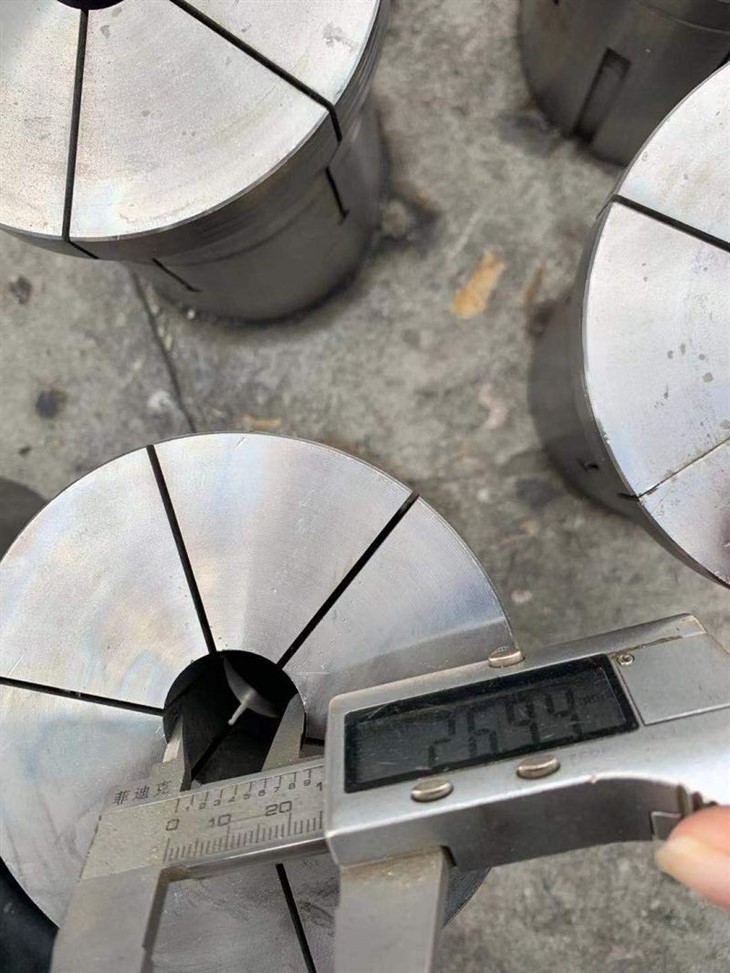
The diameter of a round spring steel collet is one of the most critical dimensions. It determines the size of the workpiece that the collet can hold. There are two main types of diameter tolerance: the bore diameter tolerance and the outer diameter tolerance.
The bore diameter tolerance refers to the acceptable variation in the inner diameter of the collet, where the workpiece is inserted. A tight bore diameter tolerance is essential for achieving accurate centering and gripping of the workpiece. For example, in high - precision machining applications, a bore diameter tolerance of ±0.005 mm might be required. This ensures that the collet can hold the workpiece with minimal runout, which is crucial for producing parts with high dimensional accuracy.
The outer diameter tolerance, on the other hand, affects the fit of the collet within the spindle or chuck of the machine tool. If the outer diameter is too large, the collet may not fit properly, leading to improper clamping and potential damage to the collet or the machine. Conversely, if the outer diameter is too small, the collet may not be held securely, resulting in inaccurate machining.
Length Tolerance
The length of a round spring steel collet also has a specified tolerance. The length tolerance affects how the collet fits within the machine tool and how it interacts with other components. A proper length tolerance ensures that the collet can be installed correctly and that it can exert the appropriate clamping force on the workpiece. In general, the length tolerance for round spring steel collets is relatively tight, typically within ±0.1 mm, to ensure consistent performance across different collets.
Taper Tolerance
Many round spring steel collets have a tapered design to facilitate easy installation and removal from the machine tool. The taper tolerance is the acceptable variation in the angle and dimensions of the taper. A precise taper is necessary for proper alignment and clamping. If the taper tolerance is not within the specified range, the collet may not seat correctly in the spindle or chuck, leading to uneven clamping forces and reduced machining accuracy.
Factors Affecting Tolerance in Round Spring Steel Collets
Several factors can affect the tolerance of round spring steel collets:

Material Properties
The quality and properties of the spring steel used in the collet play a significant role in determining its tolerance. High - quality spring steel with consistent mechanical properties is more likely to maintain tight tolerances during the manufacturing process. For example, steel with a uniform grain structure and good hardness can resist deformation better, resulting in more accurate collet dimensions.
Manufacturing Process
The manufacturing process of round spring steel collets is complex and involves multiple steps, such as cutting, forming, heat treatment, and grinding. Each step can introduce variations in the dimensions of the collet. For instance, during the heat treatment process, the collet may experience some dimensional changes due to thermal expansion and contraction. Skilled manufacturing techniques and strict quality control measures are necessary to minimize these variations and ensure that the collets meet the specified tolerances.
Design Considerations
The design of the round spring steel collet also affects its tolerance. For example, the number and shape of the slots in the collet can influence its flexibility and gripping force. A well - designed collet with an appropriate slot configuration can achieve better clamping performance while maintaining tight tolerances.
Importance of Tolerance in Applications
The tolerance of round spring steel collets is of utmost importance in various applications:
Precision Machining
In precision machining, such as aerospace and medical device manufacturing, even the slightest deviation in the collet's tolerance can lead to significant errors in the machined parts. For example, in the production of aircraft engine components, a high - precision round spring steel collet with tight tolerances is required to ensure the accurate machining of critical parts. This helps to maintain the performance and safety of the aircraft.
Mass Production
In mass production environments, consistent collet tolerances are essential for ensuring the interchangeability of parts. When multiple collets are used in a production line, they need to have the same dimensional characteristics to ensure that each workpiece is machined to the same specifications. This reduces production downtime and improves overall productivity.
Our Product Offerings
As a supplier of Round Spring Steel Collets, we offer a wide range of collets with different sizes and tolerances to meet the diverse needs of our customers. Our Round Spring Steel Collet are manufactured using high - quality spring steel and advanced manufacturing techniques to ensure tight tolerances and excellent performance.
In addition to round spring steel collets, we also provide Hex Spring Steel Collet and Octagonal Spring Steel Collet for applications that require different workpiece geometries.
Contact Us for Purchase and Negotiation
If you are in the market for high - quality round spring steel collets or have any questions about collet tolerance, we encourage you to contact us. Our team of experts is ready to assist you in selecting the right collets for your specific applications and to discuss the details of your requirements. Whether you need a small quantity for prototyping or a large order for mass production, we can provide you with the best solutions.
References
- "Machinery's Handbook", Industrial Press Inc., 31st Edition.
- "Precision Machining Technology", by David A. Dornfeld, Springer.