


Gate Valve
why choose us
'lt is awesome to work with Creative. amazingy organized,easy to communicate with. responsive with next iterations,and beautiful work.
Professional Team
We have a team for sales engineer and aftersales, service. This team focus on give customer a good experience.
Competitive Price
We have different series, covered high, middle, economical class with super high performance-price ratio.
Rich Experience
We are professional machine tool manufacturer. You may check with us for most suitable solutions.
Quality Assurance
Strict detection during production. Strict sampling inspection on products before shipment and intact product packaging.
What is Gate Valve
A gate valve is a control valve that either allows media to flow through unobstructed or stops the fluid flow. The main advantage of this type of valve is the straight-through unobstructed passageway, which induces minimal pressure loss over the valve. The unobstructed bore of a gate valve also allows for a pig's passage in cleaning pipe procedures, unlike butterfly valves. However, these valves are slower than quarter-turn valves and should only be used in the fully open or closed position, not to regulate the flow.

Types Of Gate Valve


Knife Gate Valve
A knife gate valve is used for thick fluids and dry bulk solids. The gate is only one piece of metal, which is typically pointed like a knife. These valves are self-cleaning as they pass the seat rings every time they open and close.
Wedge gate valve
A wedge gate valve has a gate in the shape of a wedge that sits on two inclined seats, as seen in Figure 4, Labeled A. In addition to the primary force created by fluid pressure, a high wedging force on the seats created by the stem's tightening assists with the sealing. The wedge-shaped gate does not stick to the seat in case of high fluid differential pressure and has an increased service life due to less "rubbing" on the seats. However, wedge-shaped gate valves have an additional compression load on the seats that may result in thermal binding and restricted valve opening due to expansion.
Parallel slide gate valve
A parallel slide gate valve has a flat gate and seats parallel to it. Parallel slide gate valves use line pressure and positioning to make a tight seal. Flat gates consist of two pieces and have a spring in the middle. The spring pushes the pieces towards the seats for enhanced sealing. Due to their inherent design, parallel gate valves have a safety advantage in higher-temperature applications. Furthermore, since there is no wedging action in parallel gates, closing torques are comparatively smaller, resulting in smaller, less expensive actuators or less manual effort. Due to their sliding into position, parallel gates keep dirt away from the seating surfaces.
Slab gate valves
Slab gates, also called through-conduit gate valves, are one-unit gates that include a bore-size hole. The bore is in line with the two-seat rings in the open state. This alignment creates a smooth flow with minimal turbulence. This unique design allows for minimal pressure loss in the system and is perfect for the transportation of crude oil and natural gas liquids (NGLs). The valve seats remain clean. However, the disc cavity can capture foreign material. Therefore, the cavity typically has a built-in plug for maintenance purposes of draining the accumulated foreign material.
Parallel expanding gates
Expanding gate valves have two slab gates matched together that provide sealing through the mechanical expansion of the gate, When lifted, both of the slab gate's cavities allow the media to flow. The upward force on one slab and the stoppage of the second slab by a step in the valve body, allows for outward mechanical expansion for a proper seal. When closed, the slab gates block the media flow, and the downward force (stem) on one slab and upward force (step in valve body) allow for outward mechanical expansion for a proper seal.
Bonnets
The bonnet of a gate valve protects its internal parts by creating a leak-proof seal. Therefore, it is removable for repair or maintenance purposes. Depending on the application, gate valves can have screw-in, union, bolted, or pressure seal bonnets.
Screw-in bonnets
Screw-in bonnets are the simplest in construction, as shown in Figure 1. They are common in small valves and provide a durable leak-proof seal.
Union bonnets
Union bonnets are held in place by a union nut. The union nut sits on the lower edge of the bonnet and screws into the valve body threads. This type of design ensures that the leak-proof seal created by the nut does not deteriorate by frequent removal of the bonnet. Therefore, union bonnets are common for applications that require regular inspection or maintenance.
Bolted bonnets
Bolted bonnets provide sealing in larger valves and higher-pressure applications.
Body
The body encases the internal parts of the gate valve. This is also the one that gets attached to the pipe system. Gate valve manufacturers use this material for the body to classify these valves. End flanges can be forged, cast or welded.
Stem
The stem is what connects the handwheel or actuator to the wedge disc. This directs the proper position of the disc when moving up or down. The stem can be classified as the rising stem or non-rising stem.
Packing
Packing acts as the gasket which additionally seals the area between the stem and the body. Made of elastomeric material, this is inserted in the stuffing box. If the gland compresses it, a tight seal happens.
Bonnet
The bonnet is located on top of the body. This is where the stem passes through, thereby guiding it, as it connects to the disc. There are three kinds of gate valve bonnets.
Gate
The gate or the wedge is the disc that hinders or allows the flow of media through the valve. There are three kinds of wedge discs.
Seat
Seats provide proper seating for the gate disc. Often, these are made of elastomeric materials. The gate valve has two seats, located on each side. These can be integrally constructed with the valve body or in the form of seat rings, which can be threaded or pressed into position, or seal welded to the body.
Actuator
Often, you’d find gate valves with handwheels. When operating torque is high, the handwheel is replaced by gears or some kind of actuator. These are fixed with a nut. This signals the opening or closing of the valve. Often you’d find markings that indicate which direction to open or close.
How Does The Gate Valve Work
The gate valve operation is in many ways similar to the operation of most valves. The hand wheel or actuator is controlled to rotate the stem, which controls the gate. For the handwheel, the wheel is turned in several revolutions before the gate valve can be fully open from a closed position or fully closed from an open position.
Control using the actuator is easier as it requires no user at the location, only an actuator system (pneumatic or electric) must be on site. By raising the gate to a fully open position, the valve allows the media to flow through the pipeline without obstruction.
Closing and sealing the pipe to the valve seat retains the flow pressure and restricts the flow of the media beyond the gate. The flow rate of the media experiences erratic change as the gate valve is closed, resulting in an unpredictable relationship between the valve and fluid flow rate.
Fluid pressure and flow against the gate wear out the seat and gate. Gate valves should not be used for flow regulation as the constant flow hastens the damage to the gate and seat.
Advantages Of Gate Valves
Gate Valves Have Low Fluid Resistance. The gate valve’s body is a straight-through shape that does not alter the flow direction, allowing fluid to pass through the valve (when in the fully open position) with minimal resistance compared to other types of valves.
Gate Valves Provide Superior Sealing Performance. Gate valves provide better sealing performance than shut-off valves. The gate valve’s opening and closing mechanism are faster and more convenient than those of the shut-off valve.
Gate Valves Have a Wide Application Range. Gate valves are extremely versatile and can be used in applications with mediums like steam, oil, and other media. Plus, gate valves can be used in mediums containing granular solids and with high viscosity. It can also be used as a venting valve and a low vacuum system valve.
Gate Valves are Bidirectional. Gate valves have dual flow directions. They’re not limited to one-way flow, nor are they subject to the flow directions of the medium. Therefore, gate valves are suitable for use in pipelines where the flow direction may change. Plus, they are easier to install than other more sophisticated types of valves.
Applications of Gate Valves
Water and Wastewater Treatment
Gate valves are extensively used in water treatment plants and wastewater systems. They serve critical roles in controlling the flow and isolation of water and treatment chemicals throughout the treatment process. Their ability to provide a full, unobstructed flow path when fully open makes them ideal for use on main water lines, where minimal pressure drop is essential.
Oil and Gas Industry
In the oil and gas sector, gate valves are vital for pipeline systems, refineries, and production platforms. They are used for on-off control of crude oil, natural gas, and other petrochemical fluids. Their robust design allows them to handle high pressures and temperatures, providing reliable isolation capabilities essential for safe operations and maintenance procedures.
Power Generation
Gate valves play a crucial role in power plants, especially in coal-fired and nuclear facilities where high-pressure and high-temperature conditions are prevalent. They are used in steam distribution systems to control the flow of steam to turbines and in cooling systems to manage water flow, contributing significantly to overall plant efficiency and safety.
Mining and Mineral Processing
In the mining industry, gate valves are used to manage slurry and abrasive fluids. The rugged design of knife gate valves, in particular, is suitable for heavy-duty applications where abrasive particles are present. These valves can efficiently cut through slurry, helping to prevent clogs and ensure continuous operation.
Marine and Shipbuilding
Gate valves are commonly found in marine applications, including shipbuilding and offshore platforms. They are used for ballast systems, fuel handling systems, and fire protection. Their ability to withstand corrosive environments due to saltwater exposure makes them an ideal choice for these applications.
Pulp and Paper Industry
In pulp and paper mills, knife gate valves are used to control the flow of pulp and recycled paper slurries. Their design allows for effective handling of fibrous materials, preventing blockages and facilitating smooth operations.
Agriculture
In agricultural applications, gate valves are used in irrigation systems to regulate water distribution to fields. They provide essential control over water flow, helping to maximise water usage efficiency and support sustainable agricultural practices.
Certifications
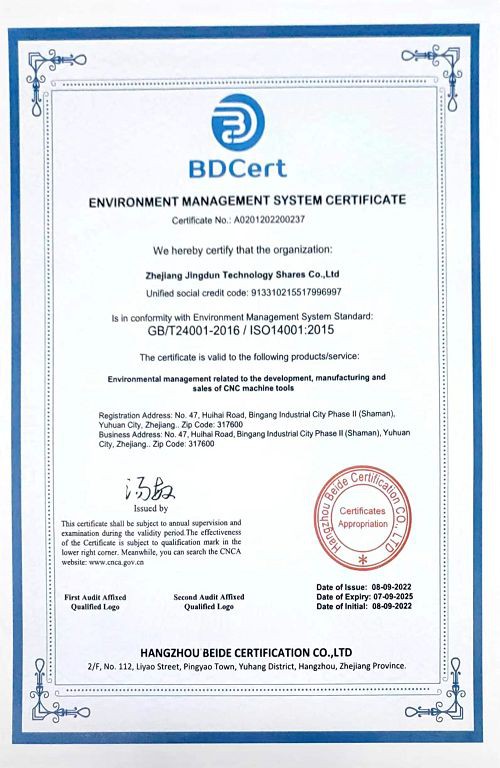


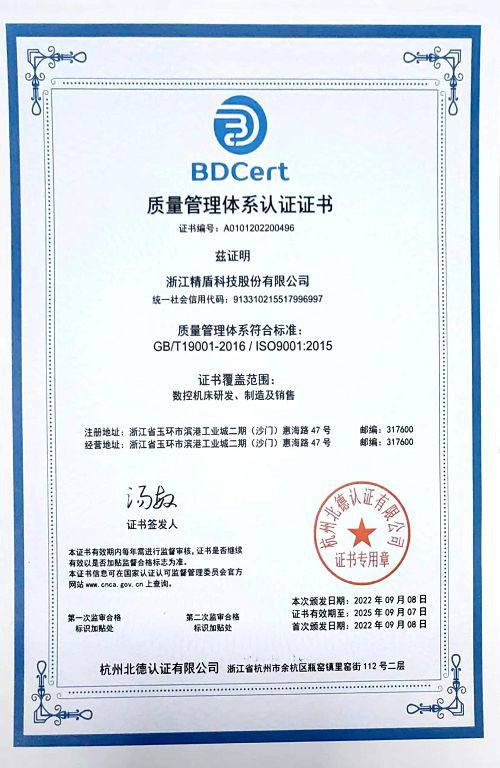
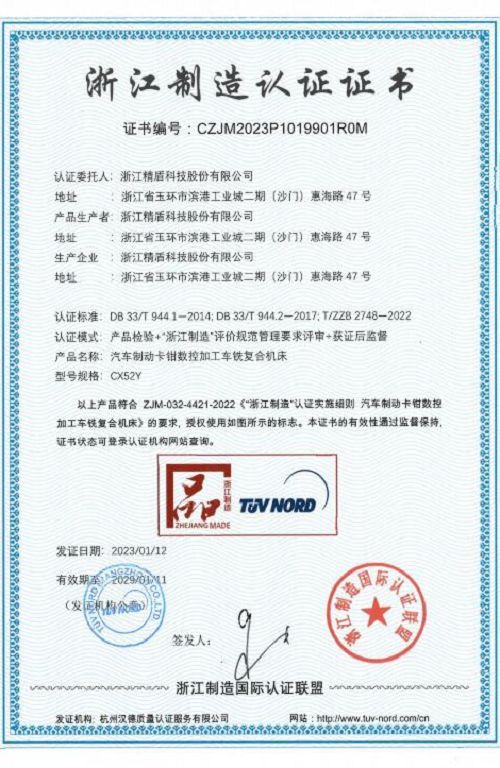


Our company sell products and also sell service,we think service is very important during the trading,we have a team for sales engineer and aftersales, service.This team focus on give customer a good experience.For supplier,we choose supplier with good quality and service,according to the user feedback,we had got the information which supplier is good which is bad.As a trading company,we can give u the good price because our quantity is big and we have experience to choose supplier and introduce the best supplier to customer.chance in your hand,give chance to our company is also give yourself a chance to get the best supplier.
FAQ
As one of the leading gate valve manufacturers in China, we warmly welcome you to wholesale cheap gate valve for sale here from our factory. All customized products are with high quality and competitive price. Contact us for more details.
Vertical Rotary Transfer Machine for Valve Industry, Spring Collet Chuck Clamping, Hex No 45 Steel Collet